Traceability
Every batch we export is QR-traceable to its cooperative of origin — a single, unbroken record from smallholder plot to verified shipment.
How It Works
Five steps, one unbroken record
Each stage adds to the same traceable record, so nothing about a batch is guessed after the fact.
Farm & cooperative origin
Produce is sourced from registered smallholder plots and women-led cooperatives, each linked to a known field of origin.
Harvest & hand-sorting
Crops are hand-picked and manually sorted at collection, protecting quality from the first hour after harvest.
Cold chain & packing
Product is cooled and packed to European specifications under a continuous field-to-export cold chain.
QR batch coding
Each batch is assigned a QR code that ties the finished pack back to its cooperative and harvest window.
Verified export
Shipments leave under GlobalG.A.P., HACCP, and Rwanda GAP standards — auditable end to end.
QR Traceability
Scan the code on any pack to trace it straight back to the cooperative that grew it.
Buyers and consumers get the same view we do: origin, harvest window, and the standards the batch was cleared under.
Garden Fresh Packhouse
Securing quality from intake to export
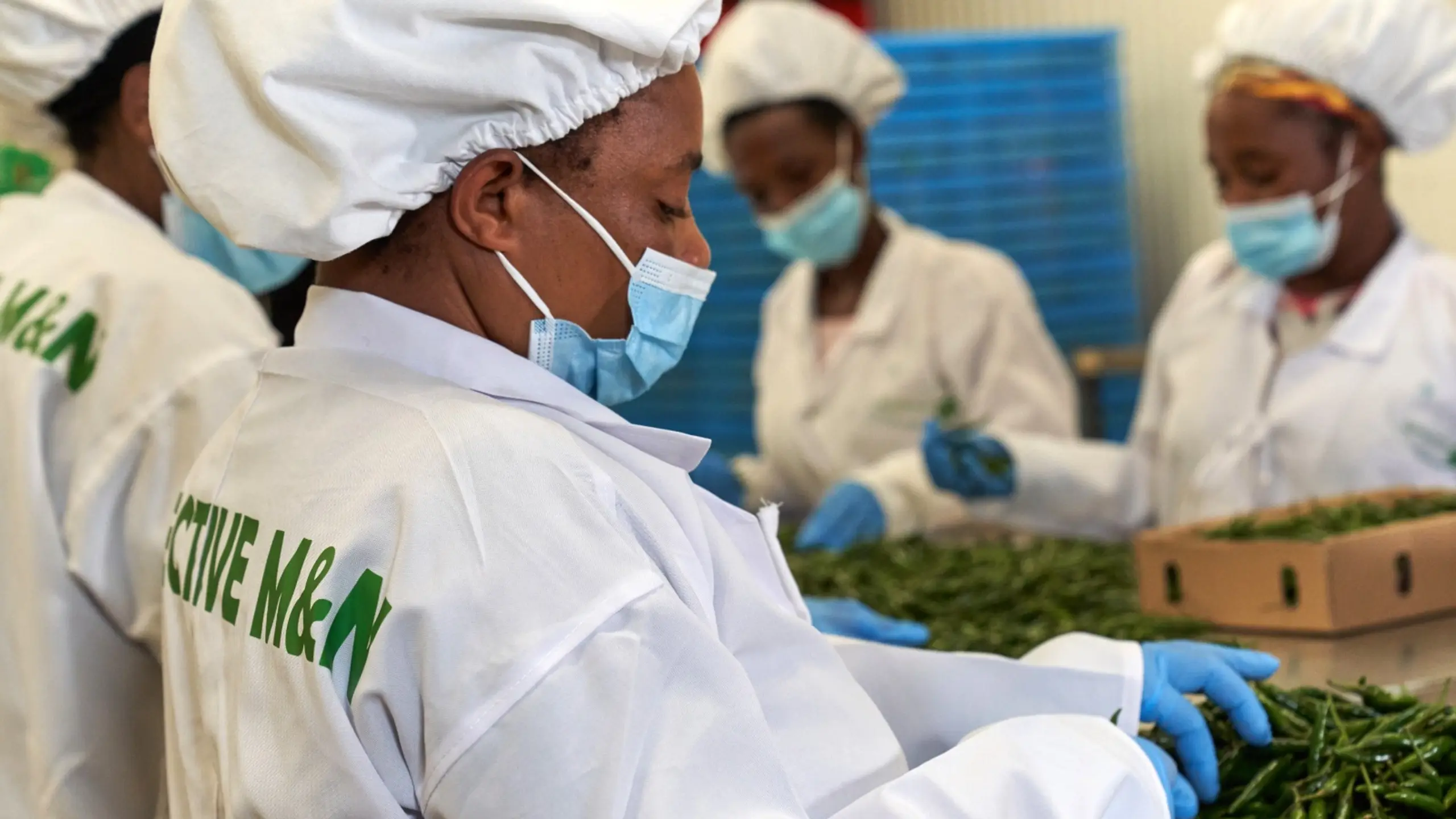
At our Garden Fresh Packhouse in the Free Trade Zone, Kigali, every step is managed to meet the demands of premium export buyers — on sanitised surfaces, in line with GlobalG.A.P. and HACCP food safety standards.
Intake & temperature checks
Each arrival undergoes temperature checks, with logs recording any heat exposure during transport.
Inspection & grading
Batches are inspected for wind, sunburn, insect, or mechanical defects, then sorted and graded to international class standards (Extra, Class 1, Class 2).
Pre-cooling
Pre-cooling at 16 °C is applied where required, preserving freshness and reducing respiration before export.
Sanitation
Water and approved sanitisers are used for comprehensive cleaning throughout the process.
QR-coded packing
Final packaging in export-ready cartons or crates, each carrying a QR code detailing farmer, cooperative, harvest date, and compliance record.
Audit-ready logs
Rejection rates, packing volumes, and shipment status are documented in digital logs, ready for audit or buyer review.
Protocols follow GlobalG.A.P., HACCP, and SMETA, with certification integration in progress. Data on rejection rates, packing volumes, and shipment status are documented in digital logs, ready for audit or buyer review.
Verified Against
The standards behind every code
GLOBALG.A.P.
Working toward Good Agricultural Practice certification for safe, sustainable and traceable fresh produce for export.
SMETA
Implementing Sedex Members Ethical Trade Audit standards for ethical labour and responsible sourcing across farms and packhouse.
Organic Certification
Targeting organic certification for chillies and selected crops, favouring organic inputs and soil protection.
Fairtrade Certification
Fairtrade certification pursued where applicable to destination markets and buyer programmes.
NAEB Export Compliance
Full compliance with export procedures and regulatory requirements of the National Agricultural Export Development Board (NAEB), plus phytosanitary and certificate-of-origin documentation.
Buyer-specific certifications
Additional certifications adopted as required by destination markets and individual buyer specifications.
RSB S-Mark
Implementing the Rwanda Standards Board quality mark for processed and milled food lines as commercial production begins.
HACCP
Rolling out Hazard Analysis & Critical Control Points food-safety management across milling and processing.
ISO 22000
Targeting the ISO 22000 food-safety management system standard for the maize milling and fortification plant.
Food Fortification Compliance
Compliance with national food fortification requirements for Vitamin A and Zinc enriched maize flour.
Source directly from Rwanda's best producers
Get a buyer pack with volumes, specifications, certificates, and lead times. Our team responds fast — by email or WhatsApp.